Quick answer: In most cases, the smell comes from the enclosure rather than the bearded dragon itself, and the source can usually be found with a systematic check. The odor is almost always trapped somewhere routine spot-cleaning doesn’t reach — soaked into loose substrate, dried onto porous décor, growing in an unwashed water bowl, or decomposing from an escaped feeder insect. A full substrate change plus a proper disinfectant scrub-down of the whole enclosure typically resolves it within a day.
Key takeaways
- Spot-cleaning removes visible mess but not what has soaked into substrate, wood, or fabric — that’s the top cause of lingering odor.
- A clear-looking water bowl can still carry a sour smell if it isn’t scrubbed daily, not just rinsed.
- Keeping cool-end humidity around 30–40% helps waste dry out faster instead of festering.
- A full deep clean — substrate replacement plus disinfecting the enclosure and décor — should happen at least once a week.
- A smell paired with diarrhea, dark stools, or low appetite may signal a health issue rather than a cleaning gap.
A bearded dragon enclosure smells for one of a small, identifiable set of reasons, and almost none of them mean your dragon is dirty by nature. In the wild, dragons bury waste in loose, well-ventilated sand where it dries out quickly; captivity is where odor tends to build up instead. This guide walks through exactly where to look, how to fix it, and when a smell is actually a sign to call a vet.
Bearded Dragon Enclosure Smells Bad Even After Cleaning — What’s Wrong?
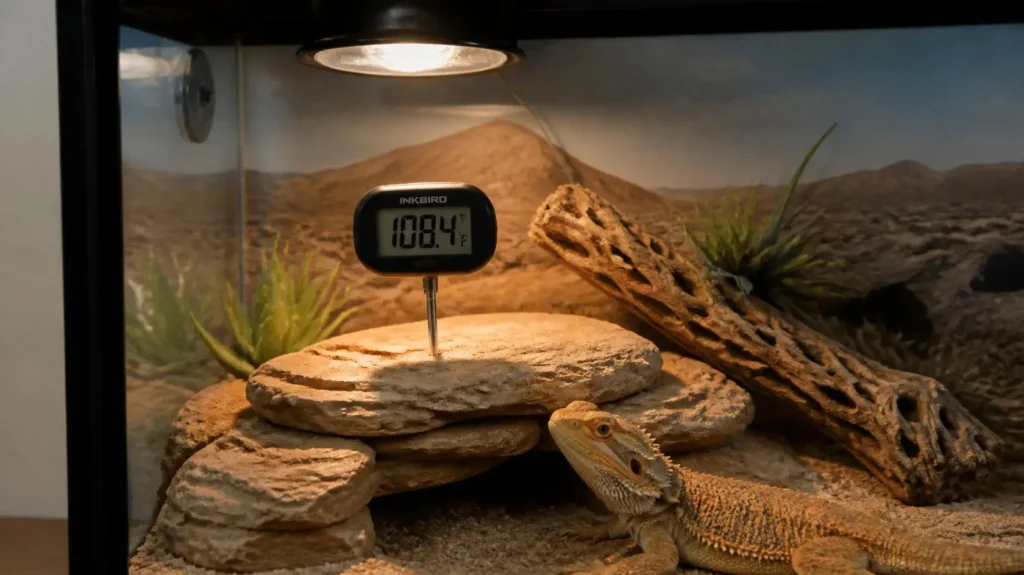
Spot-cleaning removes visible waste, but it doesn’t remove what’s soaked into substrate, dried onto rocks and branches, or growing in the water bowl. A bearded dragon’s basking zone typically runs 95–110°F — a range close to ideal for bacterial growth — which means the exact spot your dragon needs for thermoregulation is also where odor develops fastest if waste isn’t fully removed. The fix isn’t cleaning more often; it’s cleaning deeper, in the specific spots below.
One pattern experienced keepers often notice is that persistent odor usually traces back to areas that aren’t disturbed during daily maintenance — beneath heavy décor, inside enclosed hides, or in the lowest layers of loose substrate. Anywhere a scoop or paper towel doesn’t reach on a normal day is worth checking first.
What Your Enclosure’s Smell Is Telling You
| Smell type | Most likely cause |
| Faint, earthy smell | Normal — substrate or wood décor, not a problem |
| Sharp, ammonia-like smell | Urates or standing water in the substrate or bowl |
| Sour or yeasty smell | Biofilm in the water bowl or damp substrate |
| Rotten-egg or decay smell | A dead feeder insect or spoiled greens |
| Smell returns within a day of a deep clean | Possibly digestive — worth a vet check |
The 7 Most Common Causes of a Smelly Enclosure
1. Substrate has absorbed waste below the surface. This is the single most common cause of lingering odor. Loose substrates like sand, soil mixes, or bioactive blends can look clean on top while urates and feces sit soaked in underneath, well below where a scoop typically reaches. According to the RSPCA, waste should be spot-cleaned as soon as it’s noticed and the enclosure given a full clean regularly, not just a surface skim. Digging is a natural behavior the RSPCA notes provides enrichment, but it also means a dragon can bury waste several inches deep.
2. The water bowl is growing biofilm. A bowl that’s rinsed but not scrubbed daily can develop a slick film that smells faintly sour or musty, even while the water itself still looks clear. Dragons often sit in or defecate near their water to help loosen shedding skin, so this bowl usually needs more attention than owners expect.
3. Humidity is too high, so waste never dries out. According to the RSPCA, cool-end humidity should normally sit around 30–40% to prevent skin or breathing problems in this desert species. In practical terms, keeping humidity in that range also lets waste and food debris dry out quickly rather than staying damp, which is what limits bacterial growth and the odor it causes. Humidity often creeps up during humid summer months or in poorly ventilated enclosures, and enclosures in those conditions tend to develop odor faster than usual — worth checking with a hygrometer if smell has gotten worse seasonally.
4. Décor and hides have absorbed moisture and waste. Porous items — cork bark, branches, fabric hammocks, unsealed rock — soak up urine over repeated basking sessions and can hold odor even after the substrate around them is changed. Hides are a common offender: the RSPCA recommends one at both the warm and cool ends, and a dragon that spends time enclosed in one is more likely to defecate inside it.
5. Uneaten feeder insects or greens are decomposing. Crickets, roaches, and superworms that escape and die produce a smell distinctly different from waste — usually sourer or more ammonia-like. Uneaten greens left for more than a day break down quickly at basking temperatures.
6. Impaction or digestive issues are changing stool odor. Unusually foul-smelling or infrequent stools may point to a digestive problem rather than a husbandry gap, especially alongside reduced appetite or lethargy — worth ruling out with a reptile vet.
7. The enclosure itself has absorbed odor. Older glass or wood vivariums can develop micro-scratches or unsealed seams that trap residue no amount of surface wiping removes, particularly in enclosures built from untreated wood.
How to Prevent the Smell From Coming Back
- Spot-clean waste the same day it appears, rather than letting it sit through a basking cycle.
- Scrub food and water bowls daily, even when the water still looks clear.
- Keep cool-end humidity around 30–40% with a hygrometer, checking more often in humid seasons.
- Pick a substrate you can fully replace on a predictable schedule.
- Check daily for escaped feeder insects — one decomposing cricket can produce a surprisingly strong smell within a day.

Common Cleaning Mistakes
- Only replacing the top layer of substrate instead of the full depth.
- Forgetting to clean underneath heavy rocks and basking platforms.
- Leaving uneaten feeder insects in the enclosure overnight.
- Topping up old substrate rather than replacing it entirely.
- Rinsing bowls without scrubbing away the biofilm coating them.
- Rebuilding the enclosure before it has dried completely from cleaning.
Choosing a Substrate: Odor Risk vs. Cleaning Difficulty
| Substrate | Odor Risk | Cleaning Difficulty |
| Paper towel | Low | Easy |
| Reptile carpet / tile | Low | Easy |
| Slate | Low | Easy |
| Sand | Medium | Moderate |
| Soil mix | High | Hard |
| Bioactive (properly balanced) | Low | Moderate |
Solid substrates are the easiest to keep odor-free because there’s no lower layer for waste to sink into. A well-established bioactive setup can also stay low-odor, since cleanup crews like isopods and springtails break waste down before it builds up — but it takes time to balance and isn’t a shortcut for beginners.
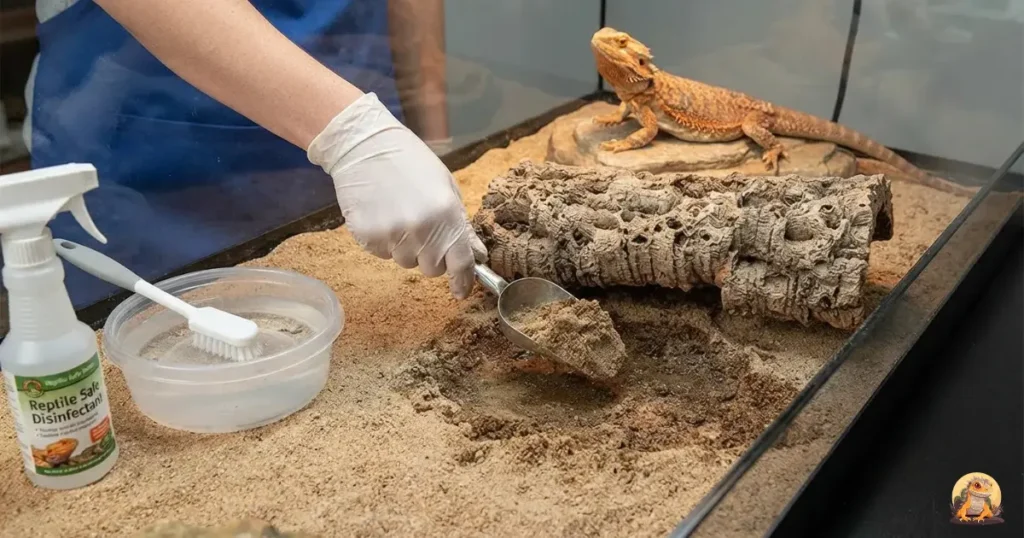
How to Deep-Clean a Smelly Enclosure
- Remove your dragon to a secure container with a shallow water dish.
- Take out all substrate, décor, and bowls for separate cleaning.
- Scrub the empty enclosure with a reptile-safe disinfectant or 3% bleach solution, including corners, seams, and the underside of the lid.
- Rinse thoroughly and air-dry completely — residual cleaner is harmful to reptiles.
- Soak porous decor in hot water with disinfectant, then dry fully, ideally in direct sun.
- Replace loose substrate entirely rather than topping it up.
- Scrub bowls with hot, soapy water daily going forward.
- Check humidity with a hygrometer before your dragon goes back in, aiming for 30–40% at the cool end.
Deep Clean vs. Spot Clean
| Spot Clean (daily) | Deep Clean (weekly) | |
| Removes visible waste | Yes | Yes |
| Removes waste soaked below the surface | No | Yes |
| Disinfects enclosure surfaces | No | Yes |
| Removes odor from décor | No | Yes, if washed separately |
| Typical time needed | 2–5 minutes | 30–60 minutes |
| Fixes a persistent smell | Rarely alone | Usually |
When a Smell Means You Should Call a Vet
A deep clean solves most odor problems, but a few signs point to a health issue instead. Contact a reptile-experienced vet if the smell is paired with diarrhea, dark or tarry stools, reduced appetite, lethargy, or a swollen abdomen — these can indicate impaction or a gastrointestinal infection. A smell that returns within a day or two of a full deep clean also suggests the source is internal rather than environmental.
The Bottom Line
Persistent enclosure odor is almost always caused by trapped waste, damp conditions, or bacteria growing on overlooked surfaces — not by the bearded dragon itself. A thorough deep clean, daily bowl scrubbing, and proper humidity control solve most odor problems. If the smell returns quickly, or comes with changes in your dragon’s stool, appetite, or behavior, consult a reptile-experienced veterinarian.
FAQ
Why does my bearded dragon’s tank smell even though I clean it every day? Daily spot-cleaning removes visible waste but doesn’t reach urine and feces that have soaked into substrate or dried onto porous décor. A full deep clean, including a complete substrate change, is usually needed to remove the trapped source.
How often should I fully clean a bearded dragon enclosure? Spot-clean daily, and do a complete deep clean — disinfecting all surfaces and replacing substrate — at least once a week, or sooner if odor builds up faster than that.
Can high humidity cause a bad smell in a bearded dragon tank? Yes. The RSPCA recommends keeping cool-end humidity around 30–40%; higher humidity keeps waste damp for longer, extending bacterial growth and intensifying odor.
Is it normal for a bearded dragon enclosure to have some smell? A very mild, earthy smell from substrate or wood is normal, but a strong, sour, or ammonia-like smell is not, and usually points to trapped waste, standing water, or decomposing feeder insects.
Could the smell mean my bearded dragon is sick? It can. If the odor is paired with diarrhea, dark or unusually foul stools, low appetite, or lethargy, contact a reptile-experienced vet rather than assuming it’s a cleaning issue.
Sourced from RSPCA bearded dragon care guidance on humidity, substrate, and enrichment. This article covers general husbandry troubleshooting and isn’t a substitute for veterinary advice.
Related reading: see our pillar guide to Bearded Dragon Enclosure Setup for complete substrate, humidity, and ventilation guidance.

Haseeb Wattoo is the founder and author of Beardie Dragon Pro. He is passionate about bearded dragon care and shares practical, research-based guides on nutrition, habitat setup, health, behavior, and husbandry. His mission is to help reptile owners provide the best care for their pets through accurate, easy-to-understand, and trustworthy information. Haseeb aims to educate both beginners and experienced keepers, promoting responsible pet ownership and healthier, happier bearded dragons.