
Quick Answer
You cannot reliably tell if a UVB bulb has stopped working just by looking at it. UVB output degrades over time even while the bulb still glows and produces visible light normally. The only accurate way to check is with a UV Index (UVI) meter, such as a Solarmeter 6.5, which measures actual UVB output rather than visible brightness. As a general rule, replace linear fluorescent and mercury vapor UVB bulbs every 10–12 months, and compact/coil UVB bulbs every 6 months, regardless of whether they still appear to be working. Waiting for physical symptoms in your dragon means the deficiency has already been building for weeks or months.
1. Why You Can’t Tell by Looking at the Bulb
This is the single biggest misunderstanding among bearded dragon owners, and it’s the reason UVB deficiency often goes unnoticed until a dragon is already sick.
A UVB bulb produces two separate things: visible light (what your eyes see) and UVB radiation (invisible to human eyes, and the part your dragon actually needs). These two outputs don’t decline at the same rate. A bulb can continue glowing brightly, looking completely normal, for months after its UVB output has dropped to near-useless levels.
This means the bulb can pass every visual check you’d normally rely on:
- It turns on.
- It looks the same brightness as always.
- There’s no flickering or buzzing.
- The basking spot still feels warm.
None of these confirm UVB output. They only confirm the bulb is producing visible light and, separately, that your heat source is working. UVB output requires a dedicated measurement, not an assumption based on appearance.
2. What UVB Actually Does and Why Output Matters More Than Light
UVB radiation triggers a bearded dragon’s skin to synthesize vitamin D3, which the body needs to absorb and use calcium properly. Without adequate UVB exposure, dragons can’t produce enough D3 through their skin, regardless of how much calcium is in their diet.
This is why UVB failure is so dangerous: the deficiency doesn’t come from a lack of food or supplements. It comes from a lack of the specific wavelength range needed to activate the vitamin D3 pathway, and a bulb that’s still lit but UVB-depleted provides no correction for that, no matter how well-fed your dragon is otherwise.
The relevant output is measured as UV Index (UVI), not brightness or wattage. Reptile lighting researchers, including work associated with the Ferguson Zone system (a classification of UVB exposure needs by species, developed by Dr. Gary Ferguson and colleagues), commonly place bearded dragons in a Ferguson Zone that calls for a basking-spot UVI in roughly the 3.0–6.0 range, depending on the specific gradient and distance setup used. Because exact figures and recommended ranges are periodically refined as research develops, cross-check current guidance from a UVB manufacturer’s index chart or a reptile-savvy veterinarian for your specific setup.
3. The Only Reliable Way to Check: UV Index Meters
A UV Index meter measures actual UVB output at a given distance, giving you a number (the UVI) rather than a guess based on appearance.
- Solarmeter 6.5 is the most widely used and recommended meter in the reptile-keeping community for measuring UVI specifically calibrated for reptile lighting.
- Basic UV flashlight testers or phone-based “UV apps” are not reliable substitutes. They typically aren’t calibrated for the UVB wavelength range relevant to reptile D3 synthesis and can give a false sense of security.
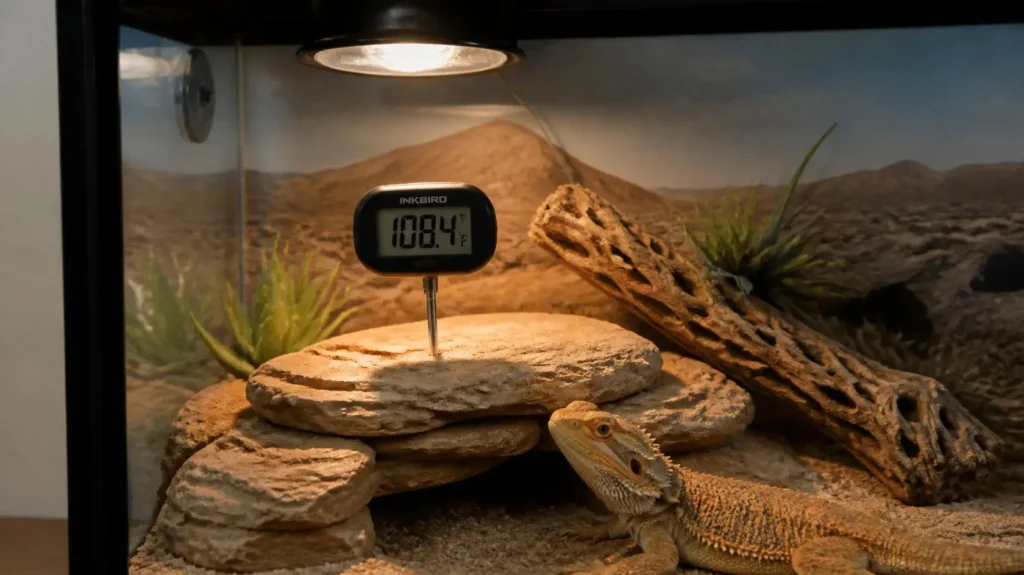
- Measure at the exact basking distance your dragon uses, not at the bulb itself. UVI output changes significantly with distance, so a reading taken 2 inches from the bulb tells you little about what your dragon receives at their actual basking spot.
If you don’t own a meter, some local reptile shops, reptile expos, or herpetological societies will test bulbs for keepers. This is a worthwhile one-time or periodic check even if you don’t own a meter yourself.
4. Manufacturer Replacement Schedules by Bulb Type
| Bulb Type | Typical Replacement Interval | Notes |
| Linear (tube) fluorescent T5 HO | 10–12 months | Longest-lasting common option; still degrades even if it looks fine |
| Linear (tube) fluorescent T8 | 6–10 months | Generally shorter-lived UVB output than T5 HO |
| Compact/coil UVB bulbs | 6 months | Known for faster UVB decay and, in some documented cases, uneven output across the bulb |
| Mercury vapor bulbs | 12 months (varies by brand) | Combines heat and UVB in one bulb; check manufacturer-specific guidance |
These intervals are general industry guidance, not a guarantee tied to any single manufacturer. Because output can decline faster than expected in individual bulbs, treat these numbers as a maximum, not a target, and confirm actual output with a UVI meter when possible rather than relying on the calendar alone.
5. Early Warning Signs Before Physical Symptoms Appear
Because visible symptoms in your dragon mean the deficiency has already been present for a while, these earlier indicators are more useful for catching a problem proactively:
- The bulb has passed its manufacturer’s replacement window, even if it still looks fine.
- A UVI meter reading at basking distance falls below the recommended range for your setup.
- The bulb is a coil/compact type older than 6 months — this bulb type has a well-documented pattern of faster UVB decay.
- Mesh or screen tops have been added or changed recently. Many mesh materials block a significant portion of UVB, even when they look “open.”
- The basking distance changed (new decor, different branch height, tank rearrangement) without re-checking whether the UVI at that new distance is still adequate.
- Glass or plastic has been placed between the bulb and the basking spot. Ordinary glass and most plastics block the vast majority of UVB.
Any one of these is a reason to test with a UVI meter or replace the bulb proactively, rather than waiting for your dragon to show signs of a problem.
6. Physical Symptoms of Long-Term UVB Deficiency
If UVB deficiency has already progressed to a physical level, watch for:
- Softening or bending of the jaw, limbs, or tail
- Difficulty walking, tremors, or twitching
- Lethargy or reduced appetite
- Swollen limbs
- Reluctance to bear weight normally
These are signs consistent with metabolic bone disease (MBD), a serious condition linked to inadequate calcium and vitamin D3 metabolism. This article does not diagnose MBD or any other condition. If you notice any of these signs, this is not something to address through better lighting alone — it requires prompt veterinary evaluation.
7. Step-by-Step: Testing Your Current Setup
- Check the bulb’s age against the replacement intervals in Section 4. If you don’t remember, treat it as a replacement priority.
- Measure the exact basking distance your dragon uses (not the closest point to the bulb, but where your dragon actually sits).
- Use a Solarmeter 6.5 or equivalent at that distance to get a UVI reading.
- Compare the reading to the recommended UVI range for bearded dragons from your bulb manufacturer or a current reptile-lighting reference.
- Check for physical obstructions — mesh, glass, plastic, or dust buildup on the bulb or fixture — that could be silently reducing UVB reaching the basking spot.
- Record the date and reading so you have a baseline for comparison at your next check.
- Replace the bulb if it’s past the manufacturer’s interval, the reading is below range, or you have no way to test it directly.
8. Common Setup Mistakes That Silently Block UVB
- Placing the bulb behind glass or plastic. Standard glass and most plastics block the majority of UVB, even though visible light passes through easily.
- Using mesh that’s too fine or too far from the bulb. Some mesh materials block a meaningful percentage of UVB output, especially when the bulb sits farther above it.
- Rearranging decor without rechecking distance. A basking branch moved a few inches farther from the bulb can push the UVI below the useful range.
- Assuming a “reptile bulb” label guarantees adequate UVB for a bearded dragon specifically. Different reptile species need different Ferguson Zone exposure levels, and not every reptile bulb is suited for a desert species like a bearded dragon.
- Leaving the same bulb in past its interval because “it still lights up.” As covered in Section 1, this is the core misconception this article addresses.
9. Bulb Type Comparison Table
| Bulb Type | Pros | Cons |
| Linear T5 HO fluorescent | Strong, more even UVB output across length; longer typical lifespan | Requires a compatible fixture; larger footprint |
| Linear T8 fluorescent | Widely available; simple setup | Generally weaker output than T5 HO; shorter effective lifespan |
| Compact/coil UVB | Compact size; fits smaller setups | Faster UVB decay; documented inconsistency in output across the bulb surface |
| Mercury vapor | Combines heat and UVB in a single bulb | Can be harder to control basking temperature separately from UVB exposure; less flexible setup |
10. Prevention Checklist
- [ ] Bulb type and install date recorded somewhere you’ll remember
- [ ] Replacement scheduled before the manufacturer’s maximum interval, not after
- [ ] UVI checked with a proper meter at actual basking distance, not guessed
- [ ] No glass or plastic between bulb and basking spot
- [ ] Mesh type and bulb height checked against manufacturer UVB-through-mesh guidance, if available
- [ ] Basking distance rechecked after any decor changes
- [ ] Reading and replacement dates logged for future comparison
11. When to Call a Vet
Contact a reptile-experienced veterinarian if your dragon shows any of the following:
- Softening, bending, or swelling of the jaw, limbs, or tail
- Tremors, twitching, or difficulty walking
- Noticeable lethargy or a drop in appetite lasting more than a day or two
- Reluctance to move or bear weight normally
These signs can be associated with metabolic bone disease or other calcium-related conditions, but only a veterinary exam can confirm a diagnosis and appropriate treatment. This article does not replace professional veterinary care.
12. Decision Tree: Is My UVB Bulb Actually Working?
Do you have a UVI meter reading taken at your dragon’s actual basking distance?
├── No → Get a reading (buy/borrow a Solarmeter 6.5, or have it tested locally)
│ before assuming the bulb is fine.
└── Yes → Is the reading within the recommended UVI range for your setup?
├── No → Replace the bulb. Recheck distance and obstructions (mesh, glass) too.
└── Yes → Is the bulb within its manufacturer’s replacement window?
├── No → Replace proactively, even with a currently adequate reading.
└── Yes → Recheck again at the next scheduled interval, or sooner
if decor, mesh, or distance changes.
13. Expert Tips
- Write the install date directly on the bulb or fixture with a permanent marker. This removes any guesswork about age later.
- Buy a UVI meter once and reuse it for years. It’s a one-time cost that removes the single biggest blind spot in reptile husbandry — assuming a lit bulb means a working bulb.

- Test after any setup change, not just on a fixed schedule. Moving decor, changing mesh, or repositioning the fixture can change effective UVI even with the same bulb.
- Don’t rely on wattage or brand reputation alone. UVB output varies by individual bulb and manufacturing batch, which is exactly why direct measurement outperforms assumptions based on specs.
14. Frequently Asked Questions
1. Can a UVB bulb still glow normally after it stops producing UVB?
Yes. Visible light output and UVB output degrade at different rates, so a bulb can look completely normal while producing little to no usable UVB.
2. How do I know if my UVB bulb needs replacing?
Check its age against manufacturer guidance (typically 6 months for coil/compact bulbs, 10–12 months for linear fluorescent), and ideally confirm actual output with a UV Index meter like a Solarmeter 6.5.
3. Do phone apps or cheap UV flashlight testers work for checking UVB output?
No, not reliably. Most aren’t calibrated for the specific UVB wavelength range relevant to reptile vitamin D3 synthesis, so they can give a false sense of security.
4. What UVI level does a bearded dragon need?
General reptile-lighting guidance places bearded dragons in a Ferguson Zone calling for a basking-spot UVI in roughly the 3.0–6.0 range, though exact figures vary by source and setup, so check current manufacturer or veterinary guidance for your specific bulb and distance.
5. Can mesh screen tops block UVB?
Yes. Many mesh materials block a meaningful percentage of UVB output, and the amount blocked can depend on mesh type, thickness, and distance from the bulb.
6. Does glass or plastic block UVB?
Yes, substantially. Standard glass and most plastics block the majority of UVB radiation even though visible light passes through normally, so a bulb should never be positioned behind either.
7. How often should I replace a UVB bulb even if it still looks fine?
Roughly every 6 months for compact/coil bulbs and every 10–12 months for linear fluorescent bulbs, based on typical manufacturer guidance, regardless of visual appearance.
8. What are the first signs of UVB deficiency in a bearded dragon?
By the time physical signs appear, such as limb or jaw changes, lethargy, or difficulty walking, the deficiency has usually been building for some time. The goal of proactive testing is to catch bulb failure before these symptoms develop.
9. Is metabolic bone disease reversible?
This varies by case and severity, and it is not something to assess without a veterinary exam. If you notice symptoms consistent with it, consult a reptile-experienced veterinarian promptly rather than attempting to address it through lighting changes alone.
10. Can I use the same UVB bulb type across all reptile species?
Not necessarily. Different species have different UVB exposure needs (reflected in Ferguson Zone classifications), so a bulb and distance setup appropriate for one species may not meet the needs of another.
11. Do LED UVB bulbs exist, and are they reliable?
LED-based UVB technology exists and continues to develop, but linear fluorescent and mercury vapor bulbs remain the most established, widely tested options in reptile keeping as of current guidance. If considering an LED UVB product, check for direct UVI-tested performance data from the manufacturer rather than assuming parity with traditional bulb types.
15. Key Takeaways
- A UVB bulb’s visible brightness tells you nothing reliable about its actual UVB output.
- The only accurate way to check is a UV Index meter, such as a Solarmeter 6.5, measured at your dragon’s real basking distance.
- Replace compact/coil bulbs every 6 months and linear fluorescent bulbs every 10–12 months, regardless of appearance.
- Mesh, glass, plastic, and distance changes can all silently reduce effective UVB even with a “good” bulb.
- Physical symptoms mean the deficiency has already been developing — the goal is to catch bulb failure before that point.
- Contact a reptile veterinarian promptly if you notice signs consistent with metabolic bone disease.
Conclusion
The core problem with UVB bulb failure is that it’s invisible until it isn’t — a bulb can look completely normal for months after it stops doing the one job that matters. The fix isn’t complicated: know your bulb’s age, replace it on schedule rather than by appearance, and if you want real certainty, measure the actual UVB output with a UV Index meter rather than trusting a visual check. Catching this early protects your dragon from a slow-building deficiency that’s far easier to prevent than to treat once physical symptoms appear.

Haseeb Wattoo is the founder and author of Beardie Dragon Pro. He is passionate about bearded dragon care and shares practical, research-based guides on nutrition, habitat setup, health, behavior, and husbandry. His mission is to help reptile owners provide the best care for their pets through accurate, easy-to-understand, and trustworthy information. Haseeb aims to educate both beginners and experienced keepers, promoting responsible pet ownership and healthier, happier bearded dragons.