
Quick Answer
It’s normal for a bearded dragon to eat little or nothing for 3 to 14 days after moving to a new tank. Most healthy adults settle back into regular eating within one to two weeks as they adjust to new smells, lighting, and layout. Juveniles should bounce back faster — if a juvenile refuses food for more than about a week, or an adult goes past two weeks, it’s time to double-check husbandry and speak with a reptile vet, since ongoing appetite loss can also point to temperature, lighting, or health issues rather than simple stress.
Why New Tanks Cause Appetite Loss
Bearded dragons are creatures of habit, and a new enclosure changes almost everything they use to feel secure at once: smell, sightlines, lighting angle, temperature zones, and the location of hiding spots. To a dragon, that’s not a cosmetic change — it’s a completely unfamiliar territory that needs to be re-assessed for safety before eating becomes a priority again.
This is a normal, well-documented stress response, not a sign that something is wrong with your dragon. In the wild, an animal that eats carelessly in unfamiliar territory is an animal that gets caught off guard by a predator. Captive dragons still carry that instinct, even in a perfectly safe living room enclosure.
The good news: this kind of stress-related fasting is almost always temporary and resolves on its own once the dragon confirms the new space is safe — as long as the underlying setup (heat, light, humidity, and hiding options) is actually correct.
How Long Is Actually Normal?
Here’s a realistic breakdown based on age and life stage. These are general guidelines, not rigid rules — every dragon adjusts at its own pace.
| Life Stage | Typical Appetite Return | When to Start Monitoring Closely |
|---|---|---|
| Hatchling (0–2 months) | 2–5 days | Past 3–4 days without eating |
| Juvenile (3–12 months) | 3–7 days | Past 1 week without eating |
| Sub-adult / Adult | 3–14 days | Past 2 weeks without eating |
| Brumating dragon | Weeks to months (separate process) | Weight loss or refusal to drink water |
Healthy adult bearded dragons can safely go without food for roughly a week to ten days under normal circumstances, and some can tolerate longer, but that doesn’t mean it’s ideal — it’s simply the buffer that makes a short adjustment period low-risk. Juveniles have far less fat reserve and need consistent protein for growth, so a stalled appetite matters sooner in a young dragon than in an adult.
If your dragon is drinking water, basking normally, and behaving alertly, a few days of reduced appetite in a new tank is rarely cause for alarm. If eating hasn’t resumed at all by the upper end of these windows, it’s time to move from “wait and watch” to active troubleshooting.
Normal Adjustment vs. a Real Problem
Use this quick comparison to sanity-check what you’re seeing.
| Sign | Likely Normal Adjustment | Likely a Real Problem |
|---|---|---|
| Appetite | Reduced but returning gradually within 1–2 weeks | No interest in food at all past the typical window |
| Basking | Basks normally, just eats less | Refuses to bask or hides constantly |
| Activity | Alert, moves around, explores | Lethargic, unresponsive, eyes sunken or closed |
| Weight | Stable | Visible weight loss, sunken tail base |
| Stool | Normal or slightly reduced | Absent for over a week, or abnormal in color/texture |
| Behavior | Occasional stress marks that fade | Persistent dark “stress beard” or glass surfing that doesn’t improve |
If your dragon is showing dark stress marks that won’t fade, it’s worth reading our guide on what it means when a bearded dragon’s beard is turning black, since this can accompany appetite loss and points to either stress or an unrelated irritation worth ruling out.
Similarly, repeated pacing and clawing at the glass alongside appetite loss is often connected — our full breakdown of why bearded dragons glass surf covers the most common triggers and how to calm the behavior.
Other Reasons a Bearded Dragon Won’t Eat
A new tank is one of the most common triggers for appetite loss, but it’s rarely the only factor at play — often the move exposes a setup issue that was already borderline. Rule these out alongside the adjustment period:
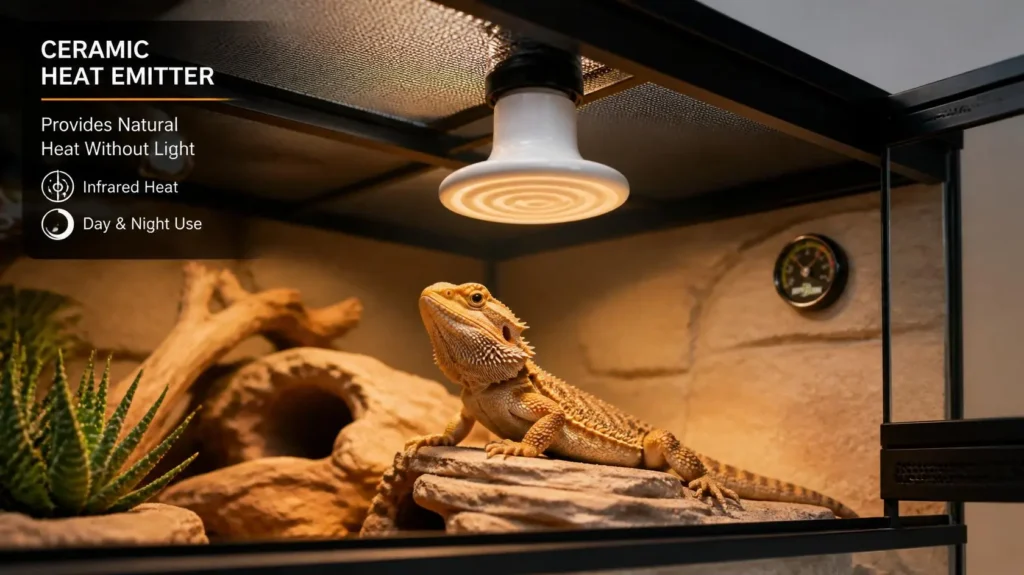
- Incorrect basking or ambient temperature. Digestion in a bearded dragon is temperature-dependent; if the basking zone isn’t hot enough, the body simply won’t prioritize eating.
- Enclosure too large or unmanaged. A big new tank without proper sectioning, cover, or a contained feeding area can make it harder for a dragon — especially a juvenile — to feel safe or locate food. If you just upgraded to a larger enclosure, our guide on whether a tank can be too big for a juvenile bearded dragon walks through how to set it up so size doesn’t work against you.
- Enclosure that’s too small or cramped. The opposite problem is just as real — insufficient space limits thermoregulation and increases stress. Our bearded dragon tank size calculator can confirm your new enclosure is appropriately sized for your dragon’s current length.
- UVB lighting placed at the wrong distance. Too far away and your dragon can’t process calcium properly; too close and it can cause discomfort. Check placement with our UVB distance calculator any time you set up a new enclosure.
- Humidity out of range. Air that’s too dry or too humid for your climate can affect shedding, breathing comfort, and overall wellbeing. If you’re unsure, see our guide on whether your tank is too humid or too dry for your climate.
- Approaching shed. Reduced appetite paired with a slightly dull or grayish skin tone often means a shed is coming, independent of the move.
- Seasonal brumation cues. Even indoor dragons can respond to shortening daylight hours in fall and winter with a natural, temporary drop in appetite.
- Portion or feeder insect mismatch. Sometimes appetite hasn’t dropped at all — the food offered just isn’t appealing or appropriately sized. Our feeding chart calculator can confirm you’re offering the right food type and amount for your dragon’s age.
Step-by-Step: Helping Your Dragon Settle In
Step 1: Confirm the Thermal Gradient First
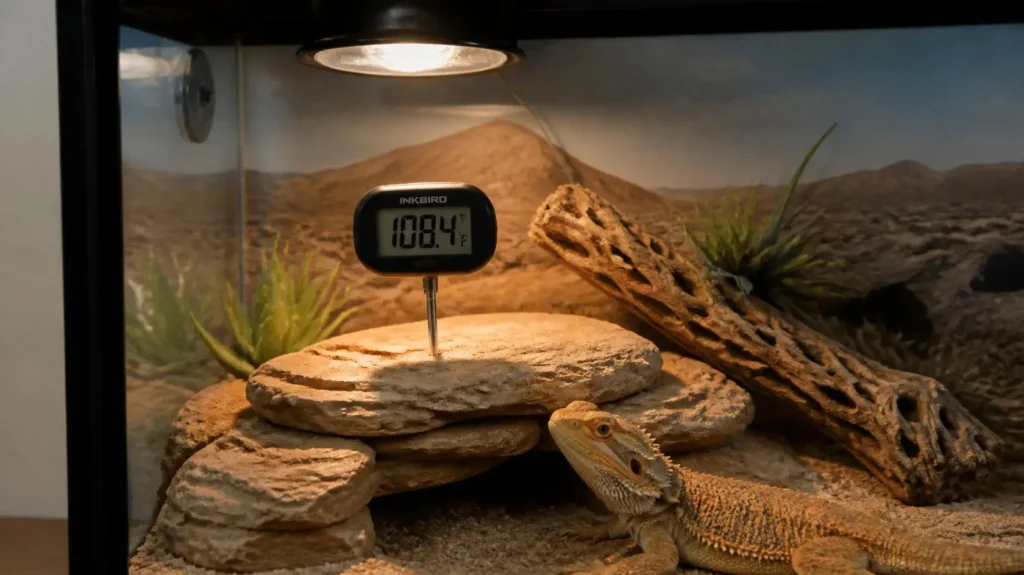
Before assuming it’s “just stress,” verify your basking zone and cool zone temperatures with a digital probe thermometer. Incorrect heat is one of the most common hidden causes behind appetite loss that gets mistaken for simple adjustment stress.
Step 2: Reduce Handling for the First Week
As tempting as it is to comfort a stressed dragon, frequent handling right after a move adds another new variable for them to process. Let them explore and settle with minimal interference for the first several days.
Step 3: Offer Food on a Normal Schedule, Then Remove It
Keep offering appropriately sized food at the usual times, but don’t leave excess feeder insects roaming loose — they can stress a dragon further and go untouched. Remove uneaten insects after 15–20 minutes.
Step 4: Keep the Environment Quiet and Predictable
Avoid rearranging decor again during the adjustment window, keep the enclosure away from loud household noise, and stick to a consistent light schedule.
Step 5: Check for Hiding Spots on Both Temperature Zones
A dragon that doesn’t feel it has anywhere to retreat to will stay in defensive mode longer. Confirm there’s a hide on both the warm and cool side.
Step 6: Track Eating, Basking, and Weight
Keep a simple daily log for the first two weeks. A gradual upward trend in appetite is the best sign that things are on track, even if meals are still smaller than usual.
Step 7: Reassess at the One- and Two-Week Marks
Use the age-based windows above as your checkpoints. If your dragon hasn’t shown any improvement by the relevant checkpoint, move on to a husbandry review and a vet call rather than continuing to wait.
Checklist: Is Your New Tank Set Up Correctly?
- Basking temperature matches age-appropriate range (confirmed with a digital probe, not a stick-on dial)
- Cool zone is available and reachable
- UVB bulb is the correct type and placed at the right distance
- Humidity is within the appropriate range for your climate
- At least one hide is available on both the warm and cool side
- Feeder insects are appropriately sized and contained, not roaming loose
- Enclosure size is appropriate for current length — not so large it’s unmanaged, not so small it’s cramped
- Enclosure location is quiet, away from heavy foot traffic, other pets, and direct sunlight
- Lighting schedule is consistent day to day
Timeline: What to Expect Day by Day
- Days 1–3: Little to no interest in food is common. Focus on confirming temperatures and reducing handling.
- Days 4–7: Many dragons start showing curiosity toward food again, even if intake is still light.
- Week 2: Most healthy adults and juveniles are back to a fairly normal feeding routine by this point.

- Past Week 2 (adults) or Past Week 1 (juveniles): If appetite hasn’t meaningfully returned, this is your signal to move from monitoring to active troubleshooting and a vet consultation.
Common Mistakes That Delay Appetite Return
- Constantly rearranging the tank to “help” — this resets the adjustment clock every time.
- Over-handling in an attempt to comfort a stressed dragon, which often backfires.
- Assuming it’s always just stress and skipping a temperature and UVB check.
- Leaving loose feeder insects in the tank, which can bite a dragon that isn’t actively hunting and add stress rather than encouraging eating.
- Changing food type and enclosure at the same time, making it hard to tell which variable is causing the hesitation.
- Waiting too long in juveniles specifically — a few extra days of “let’s just see” matters more for a fast-growing juvenile than for an adult with fat reserves.
When to Call a Reptile Vet
Reach out to a reptile-experienced veterinarian if any of the following apply, since these can indicate an issue beyond normal adjustment stress:
- A juvenile has refused food for more than about a week
- An adult has refused food for more than two weeks
- Your dragon is lethargic, unresponsive, or has sunken eyes
- There’s visible weight loss or a noticeably thin tail base
- Your dragon isn’t drinking water either

- You notice abnormal stool, straining, or no bowel movement for an extended period
- Stress marks or glass surfing persist without improvement alongside appetite loss
This article is for general education and isn’t a substitute for a professional exam. A vet can rule out impaction, parasites, or metabolic issues that can look identical to simple relocation stress in the early stages.
FAQs
How long can a bearded dragon go without eating after a tank move?
Most healthy dragons resume eating within 3 to 14 days. Juveniles typically bounce back within about a week; adults may take up to two weeks before it’s a concern.
Is it normal for a bearded dragon to not eat at all for the first few days in a new tank?
Yes. Little to no appetite for the first 2–5 days is common and usually resolves as the dragon confirms the new environment is safe.
Should I be worried if my juvenile bearded dragon isn’t eating after a tank upgrade?
Some appetite reduction in the first few days is normal, but because juveniles have limited fat reserves, refusal to eat past about a week warrants a closer husbandry check and a vet call.
What can I do to help my bearded dragon eat sooner in its new tank?
Confirm temperatures and UVB placement, add hides on both temperature zones, minimize handling, keep the schedule consistent, and avoid making further changes to the setup during the adjustment period.
Can the new tank being too big cause appetite loss?
Yes — a large, unmanaged enclosure can make it harder for a dragon, especially a juvenile, to locate food or feel secure. Sectioning the space and containing feeder insects usually resolves this without needing a smaller tank.
Does incorrect UVB distance affect appetite?
Indirectly, yes. Improper UVB exposure disrupts calcium metabolism and overall wellbeing over time, which can contribute to reduced appetite alongside other stress factors.
My bearded dragon is drinking water but not eating in the new tank — is that okay?
This is a reasonably good sign. A dragon that’s still drinking and otherwise alert is more likely dealing with normal adjustment stress than illness, but continue monitoring against the typical timeframes above.
Could humidity being off in my new setup cause a loss of appetite?
Yes. Humidity that’s too high or too low for your climate can affect comfort, shedding, and respiratory health, all of which can suppress appetite.
Is glass surfing connected to not eating after a tank change?
They often appear together, since both are stress responses to an unfamiliar or poorly set-up environment. Addressing the underlying husbandry issue typically improves both at once.
When should I stop waiting and call a vet?
Past one week of no eating in a juvenile, or two weeks in an adult — sooner if you notice lethargy, weight loss, sunken eyes, or refusal to drink water.
Could my dragon just be getting ready to shed instead of stressed about the tank?
It’s possible — a dulling skin tone alongside reduced appetite often signals an upcoming shed rather than tank-related stress, and this can happen to coincide with a move by chance.
Key Takeaways
- A few days to two weeks of reduced appetite after a tank move is normal and expected in healthy bearded dragons.
- Juveniles should be monitored more closely than adults, since their limited fat reserves make prolonged fasting riskier.
- Most “new tank won’t eat” cases resolve on their own once temperature, UVB, humidity, and hiding spots are confirmed correct.
- Persistent appetite loss past the typical window — especially with lethargy, weight loss, or refusal to drink — is a signal to consult a reptile vet.
- Avoid compounding the stress by over-handling, rearranging decor again, or changing food and tank at the same time.
Conclusion
A bearded dragon going quiet on food for a few days to two weeks after a tank move is one of the most common — and most normal — things new and experienced owners see. It’s a natural caution response, not a sign your dragon dislikes its new home. Use the timeframes above as your guide, confirm the basics of temperature, UVB, humidity, and hiding spots are correct, and give your dragon space to settle in. If appetite hasn’t returned by the relevant checkpoint for their age, that’s your cue to move from patience to a proper husbandry review and a call to a reptile-experienced vet.
This article is for general educational purposes and is not a substitute for personalized veterinary care. If your bearded dragon shows signs of illness or prolonged appetite loss, consult a reptile-experienced veterinarian.

Haseeb Wattoo is the founder and author of Beardie Dragon Pro. He is passionate about bearded dragon care and shares practical, research-based guides on nutrition, habitat setup, health, behavior, and husbandry. His mission is to help reptile owners provide the best care for their pets through accurate, easy-to-understand, and trustworthy information. Haseeb aims to educate both beginners and experienced keepers, promoting responsible pet ownership and healthier, happier bearded dragons.