
Watching your bearded dragon suddenly start pacing frantically, pressing its belly to the glass, and clawing at the walls of its tank can be startling — especially if it’s never done it before.
This behavior even has a name in the reptile community: glass surfing (also called glass dancing or glass scratching). It’s one of the most common questions new owners ask, and the sudden onset usually means something specific changed — in the tank, the season, or your dragon’s health.
This guide breaks down every real cause, ranked by how likely it is, plus an exact plan to calm it down.
Quick Answer
Bearded dragons glass surf mainly because they sense an invisible barrier and instinctively try to climb over it. Sudden glass surfing is usually triggered by a tank that’s too small, poor temperature/lighting, an outside reflection, a nearby stressor, breeding-season restlessness, or an upcoming shed. Less commonly, it signals hunger, illness, or parasites — especially if paired with appetite loss or lethargy. If your dragon is otherwise eating, active, and behaving normally, it’s rarely an emergency. If glass surfing continues for days along with other symptoms, a reptile vet visit is the next step.
Glass surfing is when a bearded dragon repeatedly presses against the glass walls of its enclosure, standing on its hind legs with front legs paddling, trying to climb straight up the glass. It often looks frantic and can happen along one wall or all around the tank.
Bearded dragons are semi-arboreal in the wild, meaning they naturally climb branches, rocks, and shrubs. Since a dragon can’t see or understand glass the way we do, its brain reads the barrier as something it should be able to climb over — so it keeps trying.
Occasional, brief glass surfing (a few minutes here and there) isn’t unusual. Sudden or constant glass surfing is the version that needs investigating, because it usually means the behavior has a specific new trigger.
If your dragon has never done this before and suddenly starts, ask yourself: what changed in the last 1–2 weeks? Sudden onset almost always traces back to one of these categories:
- A change in the room (new furniture, pet, plant, or object visible through the glass)
- A recent move of the tank to a new location
- The start of breeding season (typically spring)
- An upcoming shed
- A drop or spike in temperature (a burnt-out bulb, a broken thermostat, a season change affecting room temperature)
- Growth — your dragon may simply have outgrown its current tank
Tank Too Small or Recently Outgrown
Juveniles grow fast. A tank that fit six months ago may now feel cramped, and a cramped dragon paces and climbs to burn energy and look for more space. The general guideline is at least a 40-gallon tank for a juvenile and 75–120 gallons for an adult.
Reflection or Something Visible Outside the Glass
Bearded dragons can mistake their own reflection for a rival, or react to outdoor movement (people, cars, other pets) visible through the glass. This is one of the most common — and most overlooked — causes of sudden glass surfing, especially after moving the tank near a window or a mirror.
Incorrect Temperature or Lighting
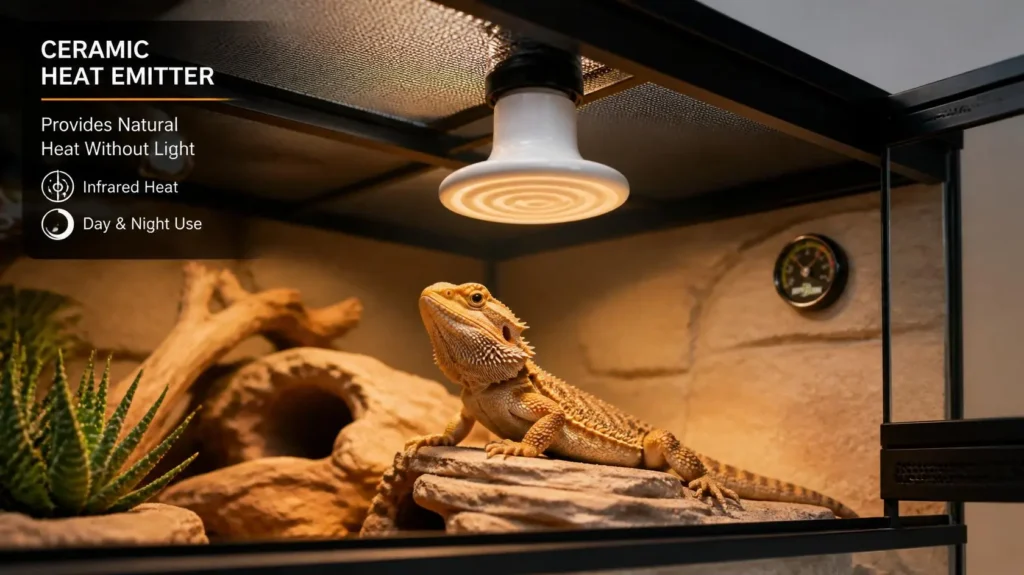
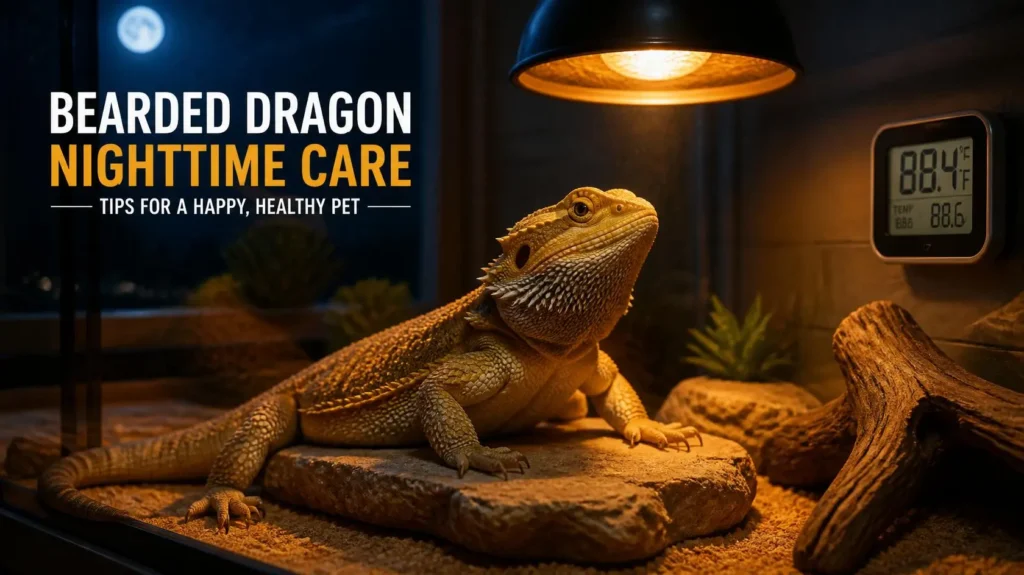
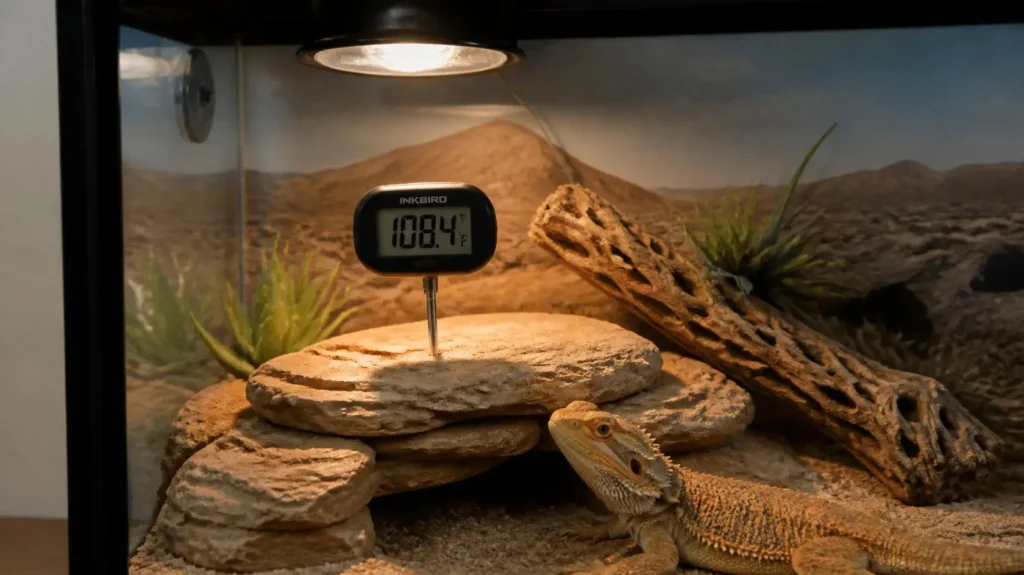
As ectothermic animals, bearded dragons depend entirely on their tank’s heat and light setup to regulate body temperature. A basking spot of roughly 105–110°F, a warm side of 95–100°F, and a cool side of 75–80°F is the standard range. A burnt-out bulb, faulty thermostat, or seasonal room-temperature swing can throw this off and trigger restless glass surfing.
Lack of Enrichment
A bare tank with little to climb, dig, or explore can leave a dragon under-stimulated. Adding branches, hides, rocks, and a cork background gives the climbing instinct somewhere appropriate to go instead of the glass.
Breeding-Season Restlessness
During breeding season (commonly spring), hormonally active dragons — especially males — become more restless as an instinct to search for a mate. This can show up as increased glass surfing even with an otherwise perfect setup.
Pre-Shed Discomfort
Tight, itchy skin before a shed can make a dragon rub and scratch against surfaces, including glass. This resolves once the shed is complete, and can be eased with a rough climbing branch and slightly increased humidity.
Hunger or Diet Imbalance
An underfed dragon, or one on an unbalanced diet, can become restless and pace the tank looking for food. This is worth ruling out with a quick review of feeding amounts and schedule.
General Stress (Handling, Noise, Housing Changes)
Frequent handling, loud household noise, or a recent home/room change can all elevate stress and show up as pacing and glass surfing, sometimes paired with a darkened “stress beard.”
Restlessness can occasionally stem from an underlying health issue such as internal parasites, a respiratory infection, or general discomfort. This is the least common cause and is usually accompanied by other symptoms — not glass surfing alone.
Expert Insight: Reptile keepers with years of hands-on experience note that the single most common reason for glass surfing is simply that the dragon doesn’t understand glass — it’s an instinct-driven climbing reflex, not a conscious escape attempt. That’s why environmental fixes (space, enrichment, blocking reflections) resolve the vast majority of cases without any medical cause at all.
| Sign | Likely Normal | Possibly Concerning |
|---|---|---|
| Frequency | Brief bursts, a few times a day | Constant, nearly all day |
| Appetite | Eating normally | Refusing food for 2+ days |
| Energy | Active and alert otherwise | Lethargic between episodes |
| Body condition | Stable weight | Losing weight or bloated |
| Trigger | Identifiable (reflection, new decor, season) | No trigger found after checking everything |
| Stool | Normal and regular | Diarrhea or no stool for days |
| Response to fixes | Improves within 1–2 weeks of changes | No improvement despite fixes |
How to Stop Your Bearded Dragon from Glass Surfing
- Check tank size first. Compare your dragon’s length and age against current tank-size guidelines. Upgrade if it has outgrown its home.
- Look for reflections or outside triggers. Cover the sides of the tank that face windows, mirrors, or high-traffic areas with a background or opaque panel.
- Verify temperatures with a digital thermometer at the basking spot and cool side — don’t rely on stick-on strips.
- Check the UVB bulb. Confirm it’s reptile-rated and replace it if it’s older than 6–12 months, even if it still lights up.
- Add enrichment. Branches, hides, rocks, and safe climbing structures give the natural climbing urge a healthy outlet.
- Review feeding amounts and schedule to rule out hunger as a factor.
- Reduce nearby stressors — loud noise, foot traffic, other pets, or excessive handling.
- Give changes 1–2 weeks to work. Bearded dragons need time to adjust to a new setup; don’t judge a fix too quickly.
- Track appetite, stool, and energy throughout this process. If everything stays normal, you’re likely dealing with an environmental cause.
- If nothing improves, or other symptoms appear, move to the vet checklist below.
When to See a Vet for Bearded Dragon Glass Surfing
Contact a reptile-experienced (exotics) vet if glass surfing is paired with any of the following:
- Not eating for 2+ days
- Lethargy or reduced activity between episodes
- Weight loss or a visibly bloated abdomen
- Diarrhea or no bowel movement for several days
- Labored breathing or open-mouth breathing at rest
- Visible lip or snout injuries from repeated glass contact
- No improvement after 2+ weeks of habitat fixes
Veterinary disclaimer: This article is for general educational purposes and doesn’t replace an examination by a licensed veterinarian. Glass surfing on its own is a behavior, not a diagnosis — but repeated glass contact can cause physical injury (like snout or lip sores) even when the underlying cause is harmless, so ongoing surfing is still worth addressing promptly.
- Assuming it’s always an emergency and skipping straight to a vet visit before checking basic husbandry.
- Assuming it’s never a concern, even when appetite loss or lethargy is also present.
- Guessing tank temperature instead of measuring with a proper digital probe thermometer.
- Changing multiple things at once, making it impossible to tell what actually fixed the behavior.

- Not giving fixes enough time. Dragons often need one to two weeks to adjust to a new setup.
- Ignoring physical injury risk. Constant surfing can cause snout rubbing or lip sores that need their own care.
- Overlooking reflections as a trigger, especially after moving the tank to a new spot in the room.
- Size the tank for your dragon’s current length, not just its age — and plan to upgrade as it grows.
- Add a background or opaque film on any glass side facing a window, mirror, or busy area of the room.
- Keep temperature and UVB on a consistent schedule, and replace bulbs on time.
- Provide daily climbing and digging opportunities through branches, hides, and safe decor.
- Stick to a predictable daily routine for feeding, lighting, and handling.
- During breeding season, expect some extra restlessness even in a perfect setup — this is often temporary and hormonal.
- Monitor for snout or lip irritation during active glass-surfing periods and treat minor scrapes as advised by a vet if needed.
Sudden glass surfing
│
├── Has the tank recently moved, or is it near a window/mirror?
│     └── YES → Likely a reflection/outside trigger. Cover that side and monitor.
│
├── Is the dragon close to or over the recommended tank size for its age?
│     └── YES → Likely outgrown enclosure. Plan a tank upgrade.
│
├── Are temperatures or the UVB bulb outside the recommended range/schedule?
│     └── YES → Fix lighting/heat. Behavior should ease within days.
│
├── Is it spring/breeding season, or is a shed approaching?
│     └── YES → Likely hormonal or pre-shed restlessness. Add enrichment, monitor.
│
├── Still surfing after 2 weeks of fixes, with normal appetite/energy?
│     └── YES → Re-check enrichment and diet; consider a formal husbandry review.
│
└── Not eating, lethargic, or losing weight?
      └── YES → Contact an exotics vet to rule out illness or parasites.
Is glass surfing always a sign of stress?
Not always. It can also come from breeding-season restlessness, pre-shed discomfort, hunger, or simply an under-sized tank — all separate from generalized stress.
Can glass surfing hurt my bearded dragon?
The behavior itself isn’t dangerous, but repeated contact with the glass can cause snout or lip sores over time, so it’s worth addressing even in mild cases.
Why did my bearded dragon suddenly start glass surfing after months of being calm?
Sudden onset almost always points to a recent change — a moved tank, a new object near the enclosure, a burnt-out bulb, outgrowing the tank, or the start of breeding season.
Does glass surfing mean my bearded dragon wants to escape?
Not intentionally. Dragons don’t understand glass as a barrier the way we do — their instinct to climb is simply triggered by what looks like open space beyond it.
Can two bearded dragons in the same room cause glass surfing?
Yes, if they can see each other. Bearded dragons are solitary and territorial, and visual contact with another dragon (or even their own reflection) can trigger repeated glass surfing.
How long should I wait before worrying about glass surfing?
If your dragon is eating, active, and passing normal stool, give habitat fixes one to two weeks to work before considering it a bigger concern.
Is glass surfing more common in juvenile bearded dragons?
Yes. Juveniles grow quickly, explore more, and are more prone to outgrowing their tank or reacting to new stimuli, making glass surfing more common at this stage.
Can diet affect glass surfing?
Yes. Underfeeding or an unbalanced diet can make a dragon restless and food-seeking, which can look identical to stress-driven glass surfing.
Should I block all sides of the tank to stop glass surfing?
Not necessarily — start with the specific side facing a window, mirror, or high-traffic area, since blocking every side can also reduce helpful visibility and light.
When should glass surfing be treated as a medical emergency?
When it’s paired with loss of appetite for 2+ days, lethargy, weight loss, breathing difficulty, or abnormal stool — these combinations warrant a prompt vet visit rather than a habitat fix.
- Glass surfing is mostly an instinct-driven climbing reflex, not a conscious escape attempt.
- Sudden onset almost always traces back to a specific recent change — tank size, reflections, lighting, or season.
- Environmental fixes resolve the large majority of cases within 1–2 weeks.
- Appetite, energy, and stool are the best indicators of whether it’s behavioral or medical.
- Persistent surfing with other symptoms — not eating, lethargy, weight loss — warrants a vet visit.
Conclusion
Sudden glass surfing can look alarming, but it’s rarely a mystery once you look at what recently changed around your dragon’s tank. In most cases, a quick check of tank size, temperature, lighting, and nearby visual triggers — followed by a couple of weeks of consistent fixes — brings the behavior back to normal. Keep an eye on appetite and energy throughout the process, and involve a reptile vet only if those core signs of health start slipping too. Understanding this behavior turns a confusing moment into a simple, solvable habitat check.

Haseeb Wattoo is the founder and author of Beardie Dragon Pro. He is passionate about bearded dragon care and shares practical, research-based guides on nutrition, habitat setup, health, behavior, and husbandry. His mission is to help reptile owners provide the best care for their pets through accurate, easy-to-understand, and trustworthy information. Haseeb aims to educate both beginners and experienced keepers, promoting responsible pet ownership and healthier, happier bearded dragons.