
The first time it happens, it’s alarming. You glance over at the tank and your dragon’s throat has gone from its normal color to almost jet black, like someone flipped a switch. Naturally, the panic sets in — is she sick? Did I do something wrong?
Here’s the reassuring part: a black beard is one of the most common things a bearded dragon does, and most of the time it has nothing to do with illness at all. The tricky part is that the same dark throat can mean nearly a dozen different things — some totally harmless, a couple that mean your setup needs adjusting, and a couple that genuinely warrant a vet call.
Below is every real cause, roughly ordered from “happens all the time” to “get this checked out,” along with a quick way to tell which one you’re actually dealing with.
Quick Answer
In the vast majority of cases, a black beard is a stress response, a temperature-regulation trick, a shedding side effect, or a dominance/mating display — all completely normal bearded dragon behavior. It’s worth paying closer attention when the black beard sticks around for more than a day, or shows up alongside a dragon that’s off its food, sluggish, or passing strange stools — those combinations point toward illness, pain, or an impaction rather than a passing mood. If the color fades once whatever triggered it goes away, there’s no need to worry. If it’s still there a full day later with other symptoms attached, that’s when it’s time to call an exotics vet — the Association of Reptilian and Amphibian Veterinarians keeps a searchable directory if you don’t already have one.
Why the Beard Even Does This
Bearded dragons don’t have the facial muscles to blush, frown, or grimace the way we do, so the beard functions as one of their only visible “tells.” Underneath that patch of skin sit pigment cells called melanophores, and when the dragon’s nervous system gets a stress, cold, or threat signal, those cells expand and the throat darkens — the same basic color-changing mechanism a chameleon uses, just far more limited and localized.
The catch is that all of those different triggers route through the same signal. A black beard by itself doesn’t actually tell you why — you have to read the context around it: how long it’s lasted, what else the dragon’s body language is doing, and what changed in the habitat recently.
1. Stress or Fear (By Far the Most Common)
This is the one you’ll see most. A vacuum cleaner turning on, a dog wandering into the room, being scooped up out of nowhere, even you rearranging a hide or branch inside the tank — any of it can flip the beard black almost instantly. It usually comes paired with a puffed-up body and sometimes an open mouth, and it drops away again once whatever spooked them is gone.
2. Trying to Regulate Temperature
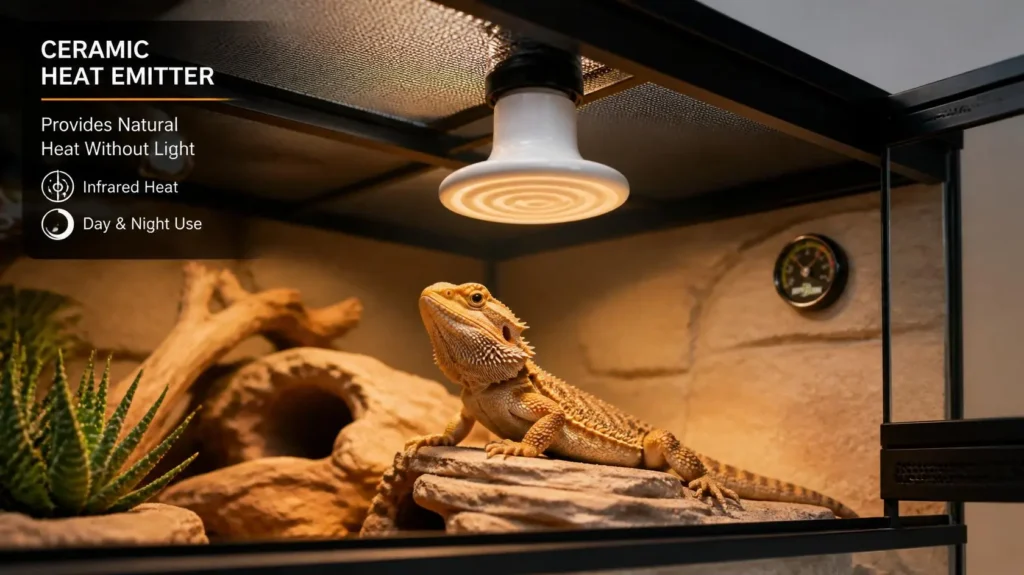
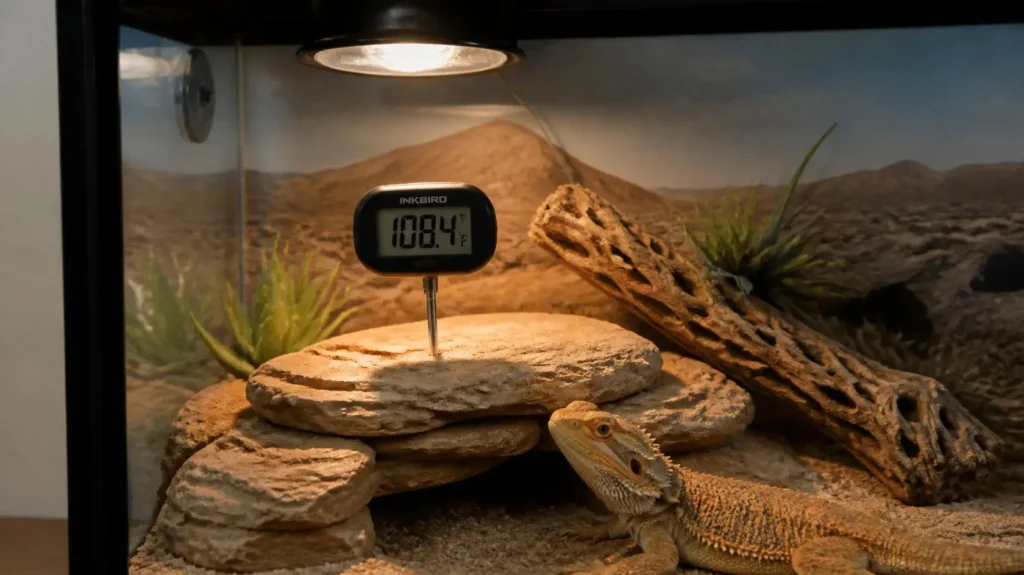
Bearded dragons are cold-blooded, so their body relies entirely on the tank’s heat gradient. A cool side around 75–80°F, a warm side around 95–100°F, and a basking spot of 105–110°F is the standard target range. If temperatures drift outside this — especially if the basking area is too cool — the beard can darken as the dragon tries to absorb more heat, since darker skin absorbs sunlight and warmth more efficiently.
3. Establishing Territory or Dominance
Even a single dragon in a solo tank can black-beard at its own reflection in glass, at a housemate, or at you if it feels its space is being challenged. This is almost always paired with an arm-wave from a submissive dragon, or head-bobbing from the dominant one.
4. Mating or Breeding Behavior
During breeding season, males in particular puff their beard, turn it jet black, and head-bob to signal interest to a female — or to assert dominance over a rival. Even a single male dragon can display this behavior seasonally with no female present.
5. An Upcoming Shed
Skin gearing up to shed often looks dull or patchy before it actually starts peeling, and that discoloration can extend to the throat. It’s temporary and clears up on its own once the shed finishes.
6. Post-Brumation Adjustment
Brumation is a reptile’s version of hibernation — a period of reduced activity in cooler months. Pet bearded dragons don’t need to brumate, but many still slow down seasonally. Coming out of brumation, a dragon may show a temporary black beard while readjusting to normal temperature, light, and activity levels.
7. Illness, Pain, or Discomfort
Sickness, infection, parasites, or pain can all trigger stress-driven darkening as a side effect. On its own, illness rarely causes a black beard — it’s when it shows up together with lethargy, appetite loss, or odd stools that it starts pointing toward a health problem instead of a simple mood.

8. Impaction (Digestive Blockage)
If a dragon has swallowed loose substrate, oversized feeder insects, or something indigestible, it may struggle to pass it. This shows up as a black beard alongside straining, a swollen belly, or no bowel movement for several days.
9. Metabolic Bone Disease (MBD) or Nutritional Deficiency
Low calcium or vitamin D3 levels — often from inadequate UVB lighting or poor diet — can eventually cause a range of symptoms including a darkened beard, along with soft jaw, tremors, or difficulty moving. This is a serious, progressive condition that needs veterinary diagnosis.
Expert Insight: Vets often describe the black beard as “non-specific” — meaning it’s a stress signal your dragon can trigger for almost any physical or emotional reason. The beard itself is rarely the diagnosis. What matters is everything happening around it.
| Sign | Likely Normal | Possibly Concerning |
|---|---|---|
| Duration | Minutes to a few hours | 24+ hours, no improvement |
| Appetite | Eating normally | Refusing food for 2+ days |
| Activity | Alert, moving normally | Lethargic, eyes closed, unresponsive |
| Trigger | Obvious (noise, handling, new object) | No clear trigger at all |
| Body | Normal shape, moving freely | Swollen belly, straining, stiff limbs |
| Stool | Normal, regular | Absent for days, or abnormal texture |
| Pattern | Resolves once stressor is removed | Recurs constantly or worsens |
What to Actually Do About It
- Stay calm and just watch for a bit. Resist the urge to pick your dragon up or move things around right away — that can add stress on top of whatever’s already triggering the response.
- Check the tank temperatures. Use a digital thermometer (not stickers) at both the basking spot and cool side. Adjust if outside the 75–110°F range described above.
- Look for something obvious. New pet in the house, a loud noise, furniture moved, a stranger visiting, another dragon nearby?
- Double check the UVB bulb. Confirm it’s actually rated for reptile UVB output and hasn’t quietly expired — most need swapping every 6–12 months even if they’re still visibly glowing (a bulb that’s flickering is usually already on its way out).
- Give it 24 hours and watch behavior. Is your dragon eating, pooping normally, moving with its usual energy?
- Gently feel the belly, if your dragon tolerates handling. A hard, swollen abdomen paired with straining can point toward impaction.
- If it clears within a day and nothing else looks off — that was almost certainly a normal stress or temperature reaction, nothing more.
- If it doesn’t clear, or other symptoms show up — move on to the checklist below.
When to Actually Call a Vet
Contact a reptile-experienced (exotics) veterinarian if you notice any of the following alongside the black beard:
- Beard stays black for more than 24 hours with no clear cause
- Loss of appetite for 2+ days
- Lethargy, sunken eyes, or closed eyes during the day
- Labored or open-mouth breathing at rest
- No bowel movement for several days, or straining to pass stool
- Swollen or hard belly
- Limb tremors, twitching, or difficulty walking
- Any sign of mouth rot (redness, swelling, discharge around the mouth)

Veterinary disclaimer: This article is for general educational purposes and does not replace an examination by a licensed veterinarian. Bearded dragons hide illness well as a survival instinct, so symptoms can look mild right up until a condition becomes serious. When in doubt, it’s always safer to call an exotics vet than to wait.
Mistakes Keepers Commonly Make
- Assuming black beard always equals sickness — and rushing to an unnecessary vet visit over something that clears up in twenty minutes.
- Assuming it’s always harmless — and brushing off a beard that’s stayed dark for days alongside appetite loss.
- Guessing at tank temperature instead of actually measuring it with a proper probe thermometer.
- Running an old UVB bulb. UVB output fades long before the visible light does, so “it still looks lit” isn’t proof it’s still doing its job.
- Overhandling a stressed dragon, which tends to prolong the black beard rather than calm it down.
- Mixing up brumation with illness (or the reverse) — both can look like sluggishness paired with a darker beard, but they call for very different responses.
Keeping It From Happening as Often
- Stick to a consistent daily routine for feeding, lighting, and handling.
- Maintain a real temperature gradient using a thermostat plus two separate thermometers.
- Replace UVB bulbs on a schedule, regardless of whether they still visibly light up.
- Add a visual barrier on one side of the glass if your dragon keeps reacting to its own reflection — this is also where a PVC enclosure has an edge over an all-glass tank.
- Introduce new decor gradually instead of rearranging the whole tank at once.
- House one dragon per enclosure — bearded dragons are solitary by nature and tend to stress each other out when housed together.
- Handle gently and keep sessions brief, especially with a dragon that’s new to your home or still young.
- Keep the enclosure somewhere with steady foot traffic and noise, not right next to a bathroom or another spot prone to sudden temperature and humidity swings.
Beard turned black
│
├── Did it happen right after handling, a loud noise, or a new object?
│     └── YES → Likely normal stress. Remove trigger, monitor 30–60 min.
│
├── Is the basking/cool side temperature outside 75–110°F?
│     └── YES → Fix temperature. Beard should normalize within hours.
│
├── Is your dragon due for a shed, or was it recently brumating?
│     └── YES → Likely normal. Monitor over the next few days.
│
├── Has it lasted 24+ hours with no clear trigger?
│     └── YES → Check appetite, stool, and activity closely.
│           │
│           ├── Eating, active, normal stool → Keep monitoring, recheck habitat setup.
│           │
│           └── Not eating, lethargic, swollen belly, or no stool for days
│                 → Contact an exotics vet promptly.
FAQs
Is a black beard always a bad sign in bearded dragons?
No. It's most often a normal stress, temperature, or social display response. Only when it's prolonged or paired with other symptoms does it point to a health issue.
How long is normal for a black beard to last?
Minutes to a couple of hours is typical for a stress response. If it persists beyond 24 hours without an obvious trigger, it's worth investigating further.
Can baby or juvenile bearded dragons get a black beard too?
Yes. Young dragons are often more reactive to handling and new environments, so black-bearding can happen more frequently at this age. It usually calms down as they mature.
Does a black beard mean my dragon is in pain?
Not necessarily, but pain and discomfort can trigger the same stress response as fear or cold. It's one possible cause among several, not a direct diagnosis.
Why does my bearded dragon’s beard turn black only at night?
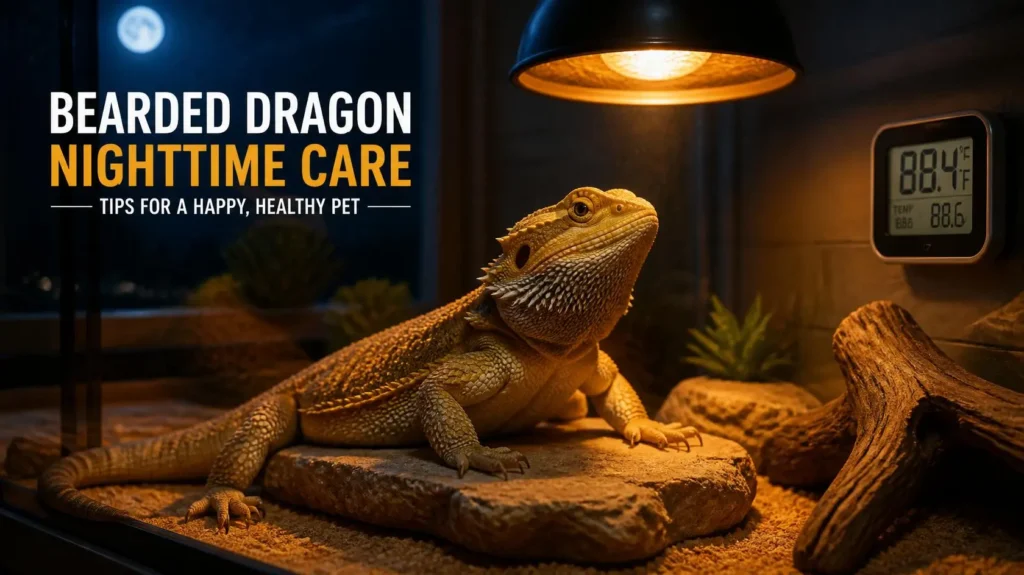
This is frequently linked to a drop in nighttime temperature. If the enclosure falls below roughly 70–75°F overnight, some dragons darken their beard while trying to regulate their body heat.
My bearded dragon’s beard is black and he’s puffed up and not moving — what does that mean?
This combination usually signals a strong stress or defensive response. Give your dragon quiet, low-stimulation time to settle. If it doesn't resolve or your dragon remains unresponsive, treat it as a warning sign and contact a vet.
Can a black beard be linked to diet?
Indirectly, yes. Poor calcium/vitamin D3 intake can contribute to metabolic bone disease, which may eventually show a darkened beard among other symptoms. Overfeeding high-water-content produce can also cause digestive upset that triggers a stress-related black beard.
Do female bearded dragons black-beard too, or is it only males?
Both sexes can black-beard for stress, temperature, and dominance reasons. The dramatic head-bobbing courtship display, however, is mostly seen in males.
Should I handle my dragon while its beard is black?
Generally, no — handling during an active stress response can prolong it. Let your dragon settle in its enclosure first, then check on it once the beard clears.
Can two bearded dragons living together cause repeated black-bearding?
Yes, frequently. Bearded dragons are solitary by nature, and cohabitation is one of the most common causes of chronic stress and repeated black-bearding. Most exotic vets recommend housing them separately.
My bearded dragon turned black and then went completely still — is that brumation?
Possibly, if it's during cooler months and paired with reduced appetite and long sleep periods. But the same picture can also describe illness, so it's worth ruling out health problems with a vet before assuming it's brumation, especially in dragons under a year old (which shouldn't brumate).
What to Remember
- A black beard is a stress signal, not a diagnosis — the cause depends on context.
- The most common reasons are fear, temperature imbalance, and social/territorial displays — all manageable at home.
- Duration and accompanying symptoms matter more than the color itself.
- Fix the basics first: temperature, UVB, and reducing stress triggers.
- If the beard persists 24+ hours with appetite loss, lethargy, or digestive issues, see an exotics vet.

Conclusion
A black beard can look alarming, but in the vast majority of cases, your bearded dragon is simply telling you it’s stressed, cold, or asserting itself — not that something is seriously wrong. The key is to watch the full picture: how long it lasts, what triggered it, and whether appetite, activity, and bathroom habits stay normal. Fix the environment first, monitor closely, and only escalate to a vet visit if the black beard sticks around or brings other symptoms along with it. Understanding this one behavior will make you far more confident reading your dragon’s body language going forward.

Haseeb Wattoo is the founder and author of Beardie Dragon Pro. He is passionate about bearded dragon care and shares practical, research-based guides on nutrition, habitat setup, health, behavior, and husbandry. His mission is to help reptile owners provide the best care for their pets through accurate, easy-to-understand, and trustworthy information. Haseeb aims to educate both beginners and experienced keepers, promoting responsible pet ownership and healthier, happier bearded dragons.